The Architecture of Emptiness: Kyoto's Raked Zen Courtyards
Dispatched by the 111111 Editorial Staff | August 29, 2024
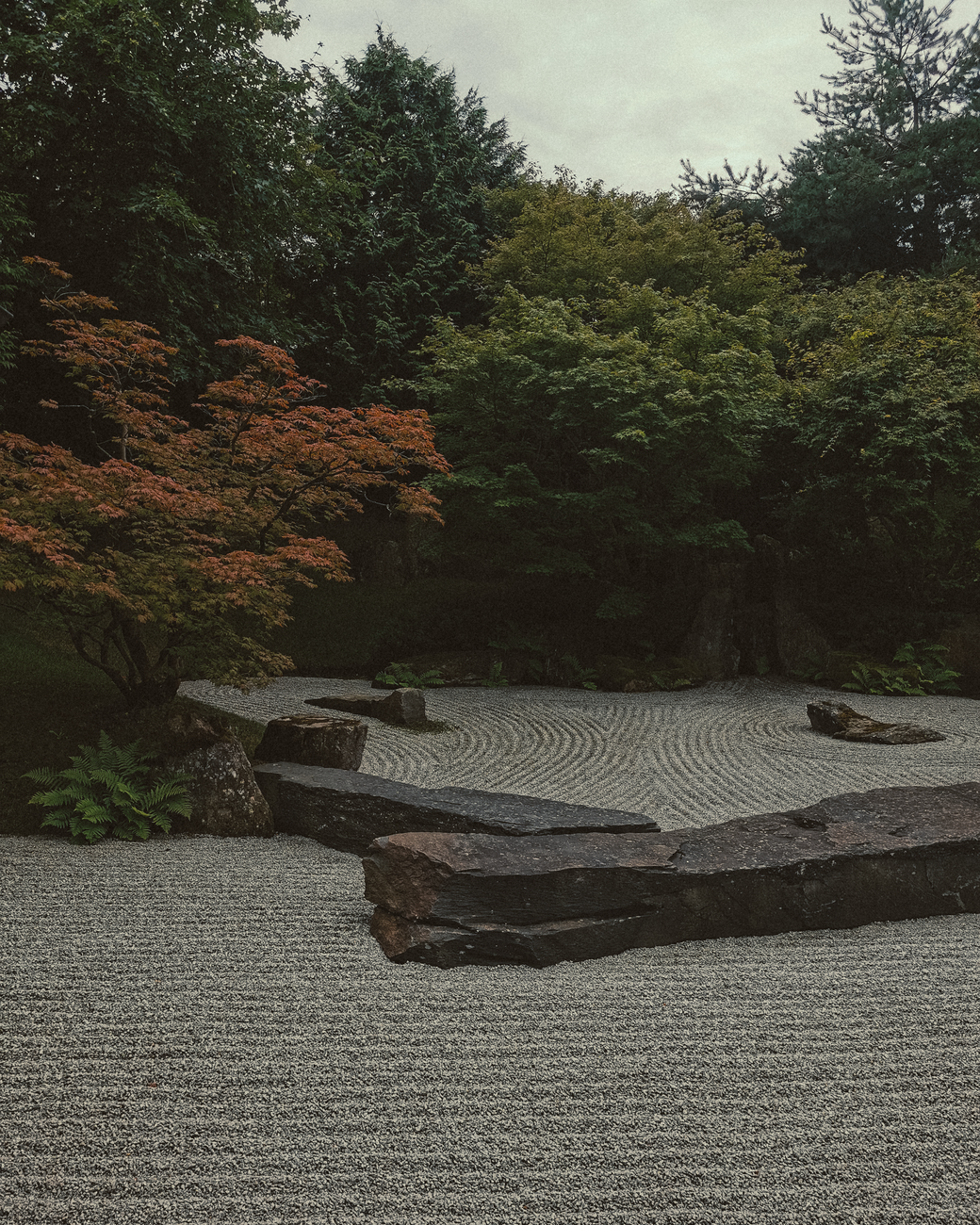
On the veranda of Ryoan-ji in northwestern Kyoto, visitors sit shoulder to shoulder in absolute hush. Before them lies a rectangle of white kaolin gravel, raked daily into concentric linear waves around fifteen weathered basalt stones. No matter where one positions oneself along the cedar deck, at least one stone remains hidden from view—an intentional lesson in the impossibility of total human perception.
Ma: The Spatial Power of the Void
Japanese design theory places great significance upon ma—the deliberate interval or empty space that gives form to surrounding matter. In Western traditions, space is often perceived as an absence to be filled with statuary, furniture, or vegetation. In classical Japanese courtyard planning, emptiness is treated as an active medium that breathes and resonates with seasonal change.
“Raked sand is not barren ground; it is an ocean of light reflecting the sky onto darkened temple eaves.”
Navigating Kyoto With Quiet Intention
To experience these temples without the noise of tour crowds requires deliberate timing. Visiting at dawn or during gentle rain reveals water droplets gathering on moss embankments, and the cedar timber creaking gently as morning humidity shifts.
- Quiet Sanctuary: Daitoku-ji's Zuiho-in sub-temple for intense gravel patterns.
- Seasonal Context: Late autumn when scarlet maple leaves settle against raked quartz.
- Etiquette: Remove shoes at the engawa thresholds and observe total mobile silencing.
By studying the restraint practiced in Kyoto's ancient monasteries, contemporary journeyers can find inspiration for simplifying their own daily environments and slowing down their engagement with global cultures.

Julian Vance
Design Correspondent for 111111